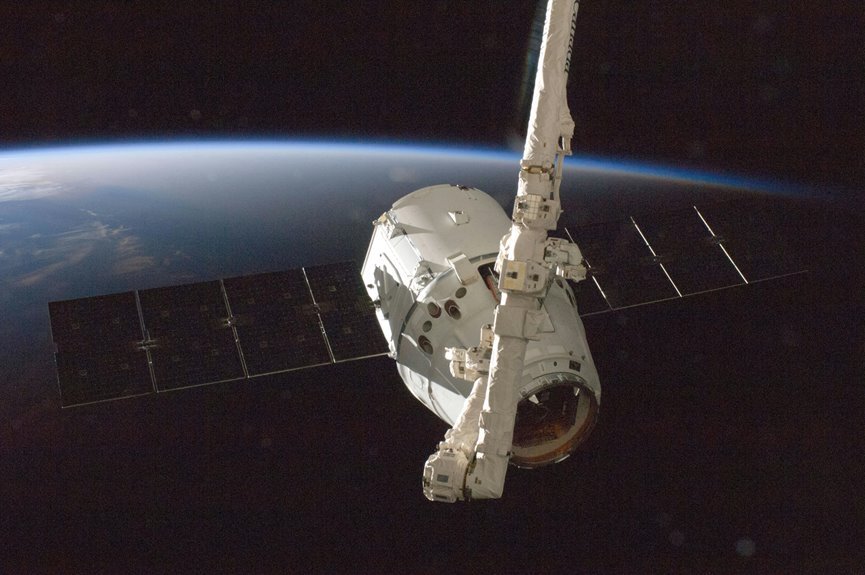
Nova Pulse 917220650 Strategic Orbit

Nova Pulse 917220650 Strategic Orbit presents a resilient, autonomous swarm architecture for dense orbital environments. It emphasizes endurance, fault tolerance, and adaptive scheduling to preserve data fidelity. Propulsion-guided oscillations enable precise trajectory cadence, while deployment swarms support rapid constellation growth and global connectivity. Standardized interfaces and regulatory-aware frameworks aim for interoperable, cost-efficient space access. The approach invites scrutiny on tradeoffs between autonomy and control, and raises questions about robustness under perturbations and regulatory convergence.
What Nova Pulse 917220650 Strategic Orbit Sets Out to Solve
Nova Pulse 917220650 Strategic Orbit addresses the core challenges of optimizing mission endurance, data fidelity, and reliability in dense orbital regimes. It targets sustained autonomous operations through strategic redirection, robust fault tolerance, and adaptive scheduling. Deployment swarms enable scalable coverage, while global connectivity ensures timely data fusion, control, and coordination across convergent, interference-rich environments for resilient, freedom-driven exploration.
How the Propulsion and Guidance Drive Its High-Altitude Cadence
How do propulsion and guidance synchronize to establish the high-altitude cadence of Nova Pulse 917220650 Strategic Orbit?
The propulsion dynamics regulate burn timing, impulse, and thrust distribution to sustain stable apogee-locked vectors.
Guidance algorithms translate telemetry into trajectory corrections, ensuring minimal delta-v while maintaining phase coherence.
Together, they produce deliberate, repeatable oscillations essential for sustained orbital cadence.
From Deployment Swarms to Global Connectivity: Real-World Impacts
The deployment swarms enable rapid, scalable constellation growth, transforming how global connectivity is provisioned and sustained. Real-world impacts include resilient linkages across remote regions, reduced latency via distributed routing, and service continuity during orbital perturbations.
Operational maturity fosters competitive metrics, cost per bit declines, and adaptive capacity, while standardization underpins interoperable networks, enabling ubiquitous access without centralized bottlenecks for deployment swarms and global connectivity.
Risks, Regulation, and What Success Could Mean for Space Access
Existing and prospective regimes governing space activity shape risk profiles, regulatory feasibility, and the pathways to scalable space access. The analysis isolates risk drivers, including debris, cyber, and supply-chain fragility, while weighing regulatory agility and international coordination. Tech policy and budget constraints influence compatibility, funding cycles, and enforcement.
Success would lower barriers, expand private participation, and accelerate resilient, affordable orbital infrastructure globally.
Conclusion
Nova Pulse 917220650 Strategic Orbit advances resilient, autonomous swarm operations for dense orbital environments, emphasizing endurance, fault tolerance, and adaptive scheduling to sustain high data fidelity. Propulsion-guided oscillations yield precise cadence, while deployment swarms enable rapid constellation growth and persistent global connectivity. Regulatory-aware interfaces enable interoperable, scalable space access. Risks and regulatory hurdles persist, yet success could redefine space access, sustaining service continuity amid perturbations—an adage: “The whole is greater than the sum of its parts,” visualizing coordinated precision.