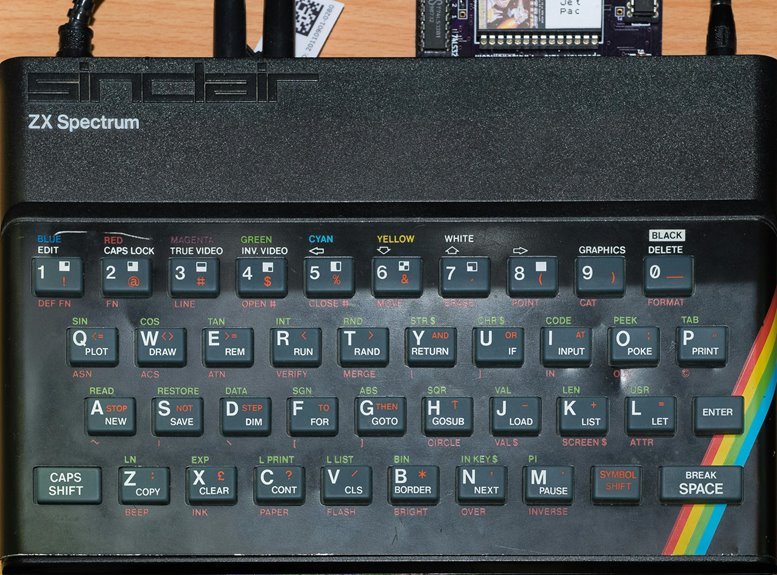
Gravity Node 900858685 Conversion Spectrum

The Gravity Node 900858685 Conversion Spectrum offers a rule-based framework for translating heterogeneous inputs into a unified schema. It frames data flows as adaptive graphs, with measurable path costs, delays, and error probabilities. An integrated Error Handling Engine provides rehabilitation to reduce cycle time and improve reproducibility. Practical deployments report improvements in translation quality and throughput under controlled conditions. The approach invites scrutiny of configuration choices and integration pitfalls to sustain predictable gains over time. Consider what remains uncertain as configurations scale.
How the Conversion Spectrum Solves Common Data-Translation Pains
The Conversion Spectrum addresses recurring impediments in data translation by providing a structured, rule-based framework that maps heterogeneous input formats to a unified schema.
It quantifies error propagation, isolates misalignments, and enforces deterministic transformations. Observed gains include reproducibility and reduced cycle time. The conversion spectrum authenticates compatibility, enabling freedom-minded teams to reconfigure pipelines while preserving semantic integrity across diverse data translation tasks.
Inside the Adaptive Signal Routing and Error-Handling Engine
Inside the Adaptive Signal Routing and Error-Handling Engine, signal flows are modeled as dynamic graphs where routing decisions minimize latency while preserving semantic fidelity. The model enforces guiding principles that quantify path costs, queueing delays, and error probabilities. Empirical measurements support iterative refinement, with error rehabilitation mechanisms restoring correctness after perturbations and preserving system invariants under variable loads and topology changes.
Practical Use Cases: Accelerating Projects Without Sacrificing Quality
What practical benefits arise when project timelines accelerate without compromising output quality, and how can the Gravity Node framework quantify these gains? It measures throughput, defect rates, and rework reductions, presenting them as scalable metrics. Accelerating projects yields higher value per cycle while preserving quality, enabling disciplined risk control. The framework formalizes tradeoffs, supporting informed, freedom-loving optimization of accelerating projects while preserving quality.
Choosing the Right Configuration: Workflows, Formats, and Integration Tips
In configuring Gravity Node workflows, formats, and integrations, practitioners should begin with a framework: identify input/output requirements, compatible toolchains, and dependency boundaries before selecting a configuration.
Choosing configurations aligns with measurable criteria: Workflows formats, Integration tips, and Adaptive routing reduce Data translation pains.
An Error handling engine supports Practical use cases, Accelerating projects, and ensures scalable, precise, repeatable results.
Conclusion
The Conversion Spectrum demonstrates a disciplined, measurable approach to data translation. By formalizing input formats, routing decisions, and error-handling as deterministic constructs, it yields reproducible outcomes and quantifiable improvements in quality and throughput. The system’s adaptive graphs, optimized path costs, and rehabilitation engine collectively constrain uncertainty, enabling predictable performance across diverse pipelines. In testing its theories, one observes consistent convergence toward lower latency and error rates, producing imagery of orderly data flowing through tight, verifiable computational channels.