
Measuring Guest Satisfaction: Why Business Students Should Study the Rubio’s Model

For many US business students, the gap between theory and practice is a chasm that feels impossible to cross. Turning raw survey data into a comprehensive 3,000-word operations report is the #1 hurdle for MBA students this semester, as they struggle to connect “customer feelings” with “corporate ROI.” While textbooks offer the definitions, real-world platforms like RubiosListens.net offer the blueprint.
In the hyper-competitive landscape of the United States fast-casual dining sector—specifically in the Southwest US market where Rubio’s Coastal Grill dominates—guest satisfaction is the bedrock of brand longevity. By examining how this brand maintains its “Coastal Tech-Mex” reputation across over 150 locations, students can learn the intricate mechanics of data-driven decision-making.
The Architecture of the Rubio’s Feedback Loop
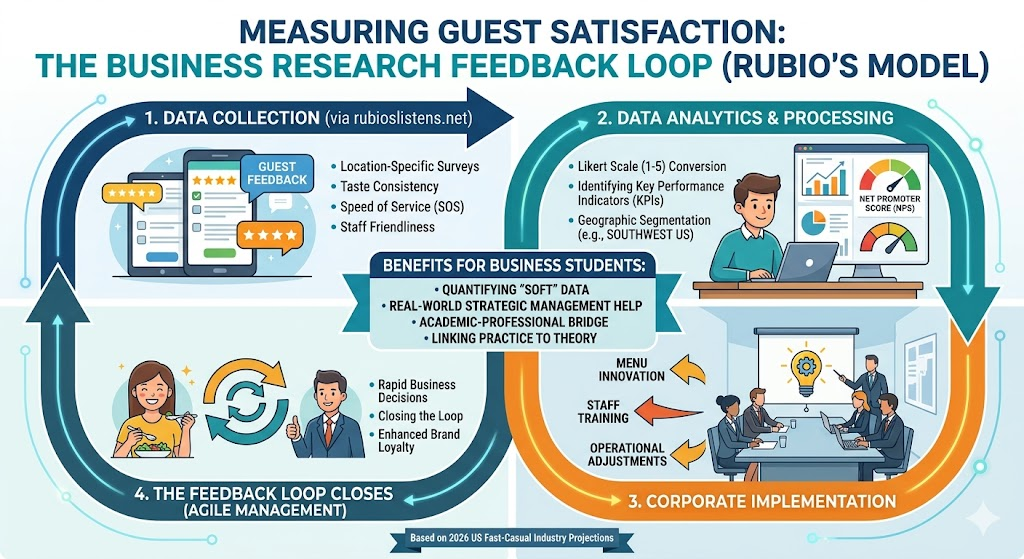
Rubio’s utilizes a highly structured Customer Experience Management (CEM) strategy. Unlike traditional surveys that sit dormant in a database, the Rubio’s model prioritizes Real-Time Data Acquisition. When a guest completes a survey, the data is immediately categorized into Key Performance Indicators (KPIs) such as taste consistency, speed of service, and staff engagement.
For a student, this represents a goldmine of consumer behavior data. However, translating this raw data into a high-quality academic paper requires meticulous documentation of industry standards. When compiling these diverse sources, the workload can become overwhelming. This is where professional services become a strategic asset; if you are struggling to document your sources correctly, you can ask an expert to Write My Annotated Bibliography to ensure your research meets the stringent APA or MLA standards required by US universities.
Why the Rubio’s Model is a Business School Goldmine
1. Quantifying “Soft” Data
The genius of the Rubio’s model lies in its ability to quantify subjective experiences. By using Likert scales (1-5 ratings), they convert a guest’s “feeling” about a fish taco into a hard data point. Business students must understand this conversion to master market research.
2. The Feedback-to-Action Cycle
In the USA, consumer loyalty is fickle. Rubio’s maintains its edge by closing the loop. If a specific region reports a dip in service speed, corporate intervenes with training modules. Studying this “Agile Management” style is essential for anyone aiming for a career in operations.
Developing a deep dive into these corporate strategies often starts with a formal research plan. If you are preparing a thesis on the hospitality sector, seeking research proposal help can provide the structural framework needed to turn a simple observation into a data-driven academic inquiry. Furthermore, students tackling complex organizational structures can benefit from specialized Strategic Management Case Study Help to better understand how feedback loops influence long-term corporate goals.
See also: Techslaash: Discover the Latest Trends at TechSlaash
Data-Driven Insights: The Fast-Casual Landscape (2026 Projection)
According to recent industry reports, the fast-casual segment in the US is projected to grow significantly through 2026. Data from the American Customer Satisfaction Index (ACSI) suggests that brands focusing on “Personalized Feedback” see a 20% higher retention rate.
| Metric | Rubio’s Model Benefit | Student Learning Outcome |
| Response Rate | High due to incentive-based surveys | Learning “Incentive Theory” |
| Data Granularity | Location-specific insights | Understanding “Geographic Segmentation” |
| Implementation | Rapid menu adjustments | Studying “Supply Chain Agility” |
Key Takeaways
- Real-World Application: RubiosListens is a prime example of operationalizing customer feedback.
- Academic Rigor: Studying such models requires high-level research skills, including bibliography management and proposal structuring.
- Industry Standards: The US fast-casual market relies on digital feedback loops to maintain 2026 growth projections.
Frequently Asked Questions (FAQ)
1. Why is the Rubio’s model relevant for US Business students?
It provides a tangible example of how digital transformation and data analytics are applied in the multi-billion dollar US restaurant industry.
2. How do I cite survey platforms like Rubio’s Listens?
Directly citing primary feedback portals requires an understanding of digital source documentation, often necessitating a professional bibliography to maintain academic integrity.
3. Is the Southwest US market different for fast-casual?
Yes, the Southwest has higher competition in the “Fresh-Mex” category, making feedback loops like Rubio’s more critical for differentiation.
About the Author
Alex Sterling is a Senior Academic Consultant and Content Strategist at MyAssignmentHelp. With over a decade of experience in the US education sector, Alex specializes in bridging the gap between corporate marketing strategies and academic research excellence. Alex currently mentors students on navigating the complexities of 2026 academic standards and SEO-driven business writing.