Neural Apex 3484392146 Stellar Grid

Neural Apex 3484392146 Stellar Grid proposes a grid-like network of dispersed models that collaborates to learn. It promises faster updates, privacy protections, and fault-tolerant consensus with reduced central bottlenecks. Yet skepticism remains about synchronization costs, governance complexity, and reproducibility. The framework depends on transparent audits and robust benchmarks. Real-world benefits hinge on data monetization, latency, and regulatory fit. The prospect invites closer scrutiny to determine whether the claims hold under practical constraints.
What Is Neural Apex 3484392146 Stellar Grid?
Neural Apex 3484392146 Stellar Grid refers to a speculative framework that purportedly links neural network architectures with a structured, grid-like topology.
The concept is presented with cautious skepticism, emphasizing potential benefits and limits.
It mentions neural apex and stellar grid in broad terms, noting distributed learning, privacy protection, speed breakthroughs, fault tolerance, evaluation methods, and use case leverage as evaluative touchpoints.
How the Stellar Grid Enables Seamless Distributed Learning
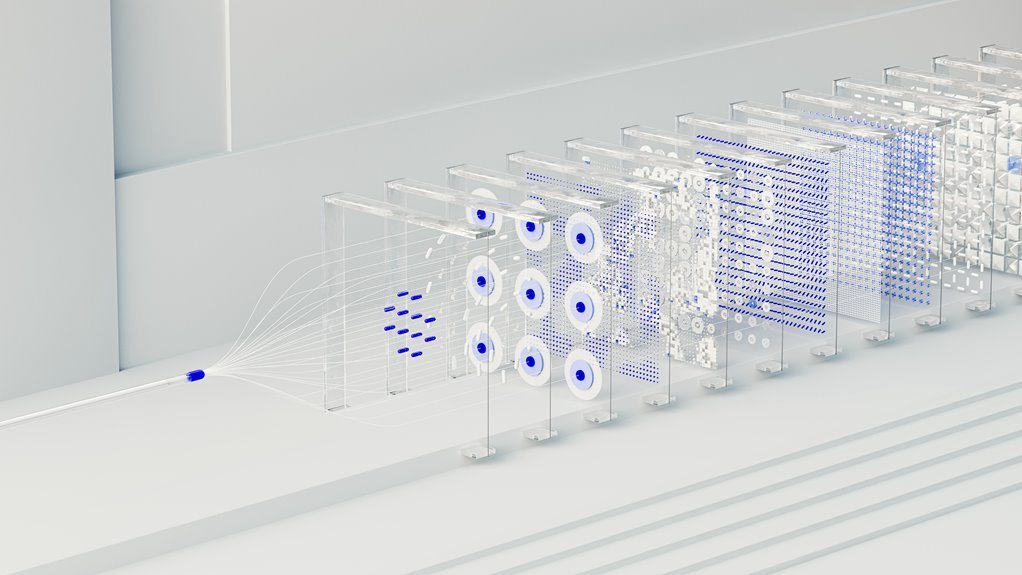
The Stellar Grid framework connects dispersed learning nodes into a coherent whole, enabling model updates to propagate across the network with minimal centralized bottlenecks. It promises efficiency for distributed learning, yet skepticism persists: dependence on consensus, potential synchronization lag, and hidden costs may offset gains. Proponents tout freedom in collaboration, while challenges test the robustness and transparency of the stellar grid architecture.
Real-World Breakthroughs: Speed, Privacy, and Fault-Tolerance
Real-world breakthroughs in the Stellar Grid framework are evaluated by speed, privacy, and fault tolerance as independent metrics rather than as a single performance claim.
Observations show privacy preserving methods coexist with transparent audits, while fault tolerant consensus remains scrutinized for resilience under adversarial conditions.
Claims require reproducible benchmarks, not rhetoric, before broad deployment.
Skepticism guards freedom and responsibility in distributed, high-stakes systems.
How to Evaluate and Leverage the Stellar Grid for Your Use Case
What criteria should practitioners use to assess the Stellar Grid for a specific application, and how can those criteria guide practical deployment?
The analysis remains detached, skeptical, and precise.
Key factors include data monetization potential, ethical alignment, latency, scalability, and governance.
Evaluate risks, interoperability, and regulatory fit before deployment; align incentives with user autonomy, transparency, and long-term freedom within responsible constraints.
Conclusion
The Neural Apex 3484392146 Stellar Grid promises rapid, privacy-preserving distributed learning with fault tolerance. While its architecture may reduce central bottlenecks, real-world deployment faces governance, latency, and interoperability hurdles that can erode gains. Skeptics should demand transparent benchmarks and reproducible audits before widespread adoption. Overcoming concerns about consensus delays is essential; otherwise the system risks underperforming in time-sensitive settings. Approach claims with scrutiny, validate with independent tests, and tailor the grid to concrete, regulatory-aligned use cases.